Genre & Tonal Flexibility
The universe is the constant. The genre is the lens.
Malacca: The Golden Age is not a single-genre franchise. It is a world — and like the real Malacca Sultanate, that world is large enough to contain multitudes. The franchise’s source texts themselves demonstrate this range: the Sejarah Melayu reads as political history; the Hikayat Hang Tuah reads as epic romance. One is closer to a chronicle; the other to mythology. Both are canon.
This means the franchise supports — and actively encourages — a wide spectrum of genre expressions. The only requirements are that stories respect the canon events, operate within the world’s established geography and political structure, and maintain the thematic commitments outlined in this bible.
The Genre Spectrum
The following is not a production slate. It is a demonstration of range — a menu of what the Malacca universe can accommodate.
Political Thriller / Intrigue Drama
The Game of Thrones lens. The Sultan’s court is a nest of factions: the Bendahara’s intelligence apparatus, the Shahbandars’ merchant guilds, the Temenggung’s enforcers, foreign ambassadors playing all sides. Trade policy is warfare. Marriages are alliances. A poisoned rumour can topple a dynasty. Shadow of the Straits already leans in this direction — a dedicated political drama could go further, removing combat entirely and making every weapon a conversation.
Horror / Supernatural Thriller
The pontianak in the coconut grove. The penanggal above the kampung. The toyol sent to steal from your enemies. The Malay supernatural tradition is one of the richest and most terrifying in the world, and this franchise has room for all of it. A story following a bomoh (shaman-healer) who hunts the undead through Malacca’s moonlit alleys and stilt villages is entirely valid. A vampire hunter narrative set against the backdrop of political collapse — where the monsters are real but the true horror is human — fits perfectly within these walls.
The supernatural elements already established in the franchise (sea spirits, cursed kris blades, the Puteri Gunung Ledang, the Orang Bunian) provide a rich foundation. Horror stories simply turn the dial from ambiguity to encounter. The rule remains: the supernatural is believed. In a horror story, it is also experienced.
Grand Strategy / Empire Management
The Three Kingdoms lens. Malacca’s geopolitical position — caught between Ming China, Majapahit Java, Ayutthaya Siam, and encroaching European powers — is a natural fit for grand strategy. A game or series depicting the Bendahara’s attempts to manage alliances, suppress piracy, regulate trade, and hold the Sultanate together against internal and external threats could sustain an entire franchise pillar. Think: the macro view of the same collapse that Shadow of the Straits depicts at street level.
Naval Adventure / Piracy
The Black Flag lens. Already partially realised in Malacca: Black Tide, but the franchise can go further. The Straits of Malacca are some of the most contested waters in human history. Orang Laut sea nomads, Javanese raiders, Chinese merchant-pirates, and Portuguese corsairs all operate in these waters simultaneously. Stories of pirate queens, smuggling networks, and the grey line between piracy and statecraft are all available.
Martial Arts Epic
The wuxia lens. Silat is one of the oldest martial arts traditions in the world, with deep connections to Sufi mysticism, animal forms, and spiritual discipline. A story focused on the silat masters of the Nusantara — their schools, rivalries, philosophies, and supernatural capabilities — could be as rich and expansive as any Chinese martial arts saga. The Hikayat Hang Tuah already operates in this register: legendary warriors, magical weapons, and duels that reshape nations.
Romance / Melodrama
The Tun Teja lens. The story of Hang Tuah deceiving Tun Teja — seducing her on behalf of his king, betraying her love to fulfil his duty — is one of the most devastating romance narratives in any literary tradition. Peranakan love stories across ethnic lines, forbidden relationships between merchant houses, court romances complicated by political obligation: the franchise’s plural society generates romantic conflict naturally.
Espionage / Intelligence Thriller
The John le Carré lens. The hulubalang’s intelligence apparatus is already the backbone of Shadow of the Straits. A dedicated spy thriller — no combat, pure tradecraft — could explore the information war between Malaccan intelligence, Portuguese spies, Javanese agents, and the merchant networks that serve all sides simultaneously. Dead drops in the bazaar. Turned assets in the Shahbandar’s office. The paranoia of an intelligence service that suspects everyone, including itself.
Coming-of-Age / Bildungsroman
The five friends lens. Hang Tuah, Hang Jebat, Hang Kasturi, Hang Lekir, and Hang Lekiu as youths — studying silat under Adi Putra, fighting pirates, discovering their strengths and fractures — is a coming-of-age story with the weight of tragedy already visible on the horizon. The audience knows these boys will grow up to love and kill each other. That foreknowledge transforms every scene of youthful camaraderie into elegy.
Folklore / Fairy Tale
The myth lens. The Puteri Gunung Ledang. The mousedeer and the hunting dog. The swordfish of Singapura. The Orang Bunian in the deep jungle. The Malay tradition is rich with folk narratives that sit between the human and supernatural worlds. Illustrated storybooks, animated series, or anthology films drawing from this tradition can serve younger audiences while building familiarity with the franchise’s world and themes.
The Flexibility Principle
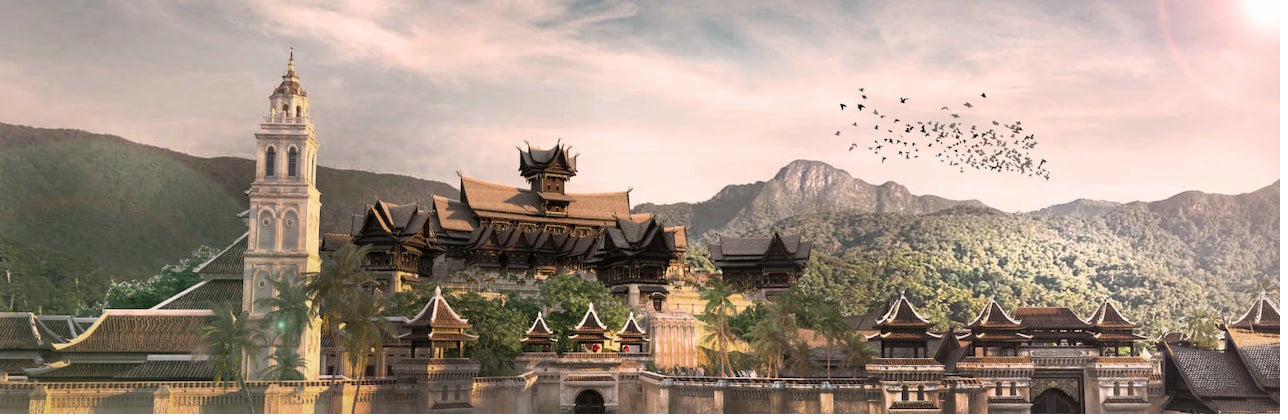 Malacca — Concept Art by Faizal Rahmat
The franchise’s source texts already contain political intrigue, supernatural horror, martial arts fantasy, tragic romance, espionage, and coming-of-age narrative — sometimes within the same chapter. The Sejarah Melayu moves from court politics to sea battles to encounters with spirits without breaking stride. The Hikayat Hang Tuah sends its hero from a backstreet knife fight to a diplomatic mission to Majapahit to a supernatural courtship on a mountaintop.
This genre fluidity is not a modern imposition. It is inherent to the source material. The franchise simply honours it.
If a story respects the canon, serves the world, and tells the truth about its characters — it belongs here.
What Must Remain Constant
Across all genres and tones, the following elements are non-negotiable:
- Historically grounded. Even fantasy and horror stories exist in a recognisable Malacca with real geography, real political structures, and real cultural texture.
- Human complexity. There are no cartoon villains, even in horror. There are no flawless heroes, even in romance.
- Southeast Asian perspective is centred. No genre expression may reduce the setting to exotic backdrop for external protagonists.
- The Covenant’s tension is present. Every story in this world exists in the space between loyalty and justice — even if it never names that tension directly.
- The supernatural is never fully explained. Even in horror, the metaphysics remain uncertain. A bomoh may battle a pontianak, but the audience should never be entirely sure whether the spirit is real, symbolic, or both.